
Clinical decision support
Consolidated views that bring together relevant imaging and clinical context—supporting timely decisions while keeping access controls and audit trails defensible for Australian healthcare settings.
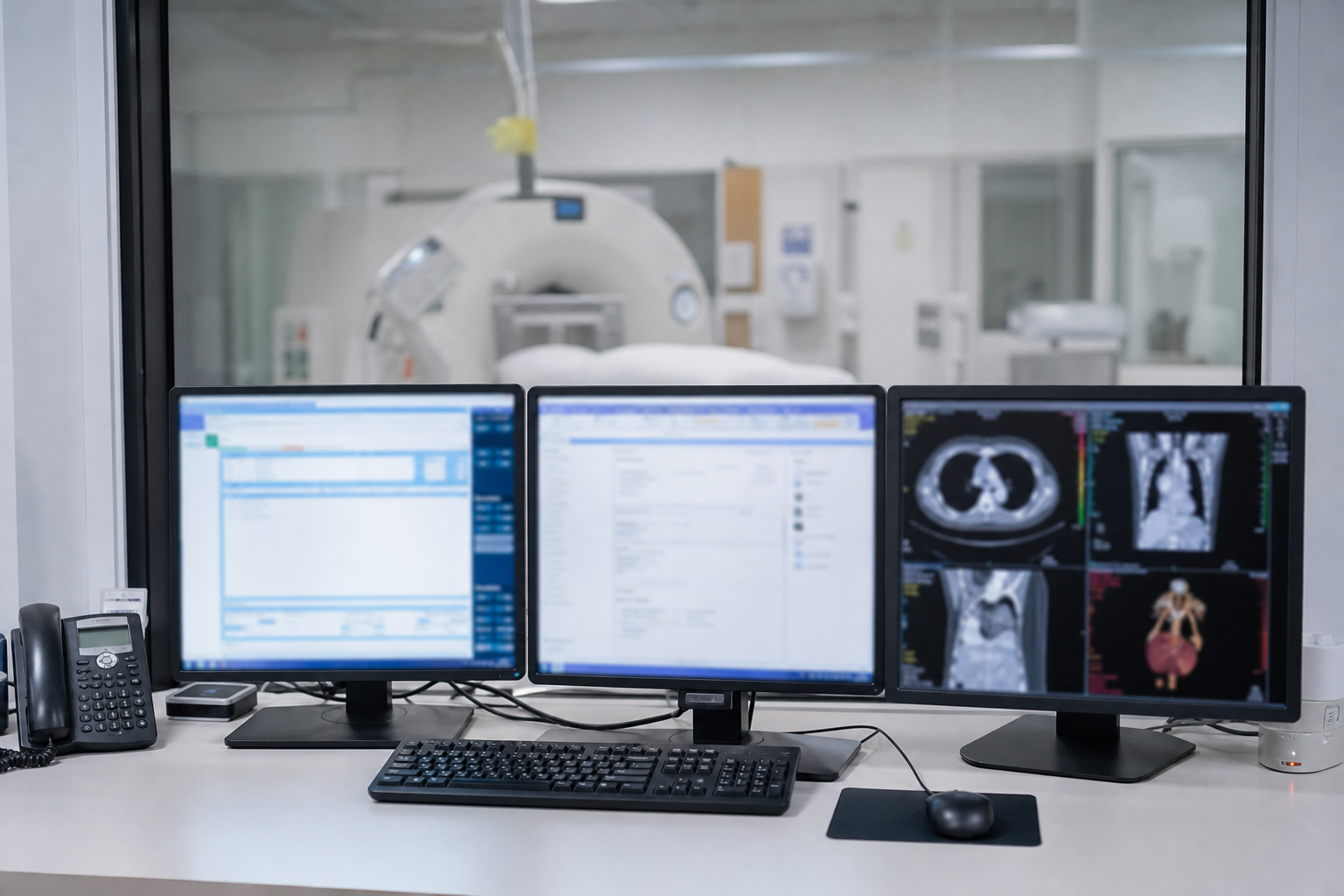
Decision support in radiology is less about novelty alerts and more about trustworthy presentation: what is on screen, who can see it, and how changes propagate across campuses. We bias toward predictable layouts, explicit permissions, and logging that survives scrutiny—not “smart” behaviour that is hard to explain after the fact.
If you are comparing options, ask vendors how they handle concurrent access, template versioning, and escalation when integrations disagree. Those answers separate enterprise-grade delivery from demo polish.
Consolidated context, not cluttered context
Decision support surfaces fail when they become a dumping ground for every possible datum. Effective CDS in imaging prioritises signal: relevant priors, pertinent labs, structured problem lists where available, and clear separation between authoritative results and provisional documentation. Layout stability matters as much as data richness—radiologists build muscle memory around where critical elements live.
In Australian public and private settings, medico-legal expectations also push toward defensible presentation: what was visible at the time of reporting, and whether access matched role and episode context. The product should make those boundaries legible without forcing reporters to fight the workstation during a busy list.
Operational controls: templates, macros, and change windows
Clinical decision support is tightly coupled to reporting templates and voice command profiles. Uncontrolled edits create silent variation between sites. We recommend—and engineer for—versioned templates, promotion paths that require appropriate sign-off, and audit trails that show which version was active when a report was signed.
During EMR or RIS upgrades, CDS-adjacent workflows are often the canary: broken links, missing identifiers, or altered code sets. Delivery planning should include regression packs for common study types and referrer pathways, not only “smoke tests” on a single training workstation.
Performance, latency, and after-hours reality
Decision latency is a clinical variable. After-hours lists do not forgive spinning wheels or ambiguous loading states. Engineering focus includes warm caching of expected context, graceful degradation when a feeder system is slow, and explicit user messaging rather than silent partial loads that look complete.