
Mobile & bedside access
Secure, role-appropriate access for authorised staff who need imaging and results away from the main reading room—without weakening session discipline or the evidence trail expected under Australian privacy practice.
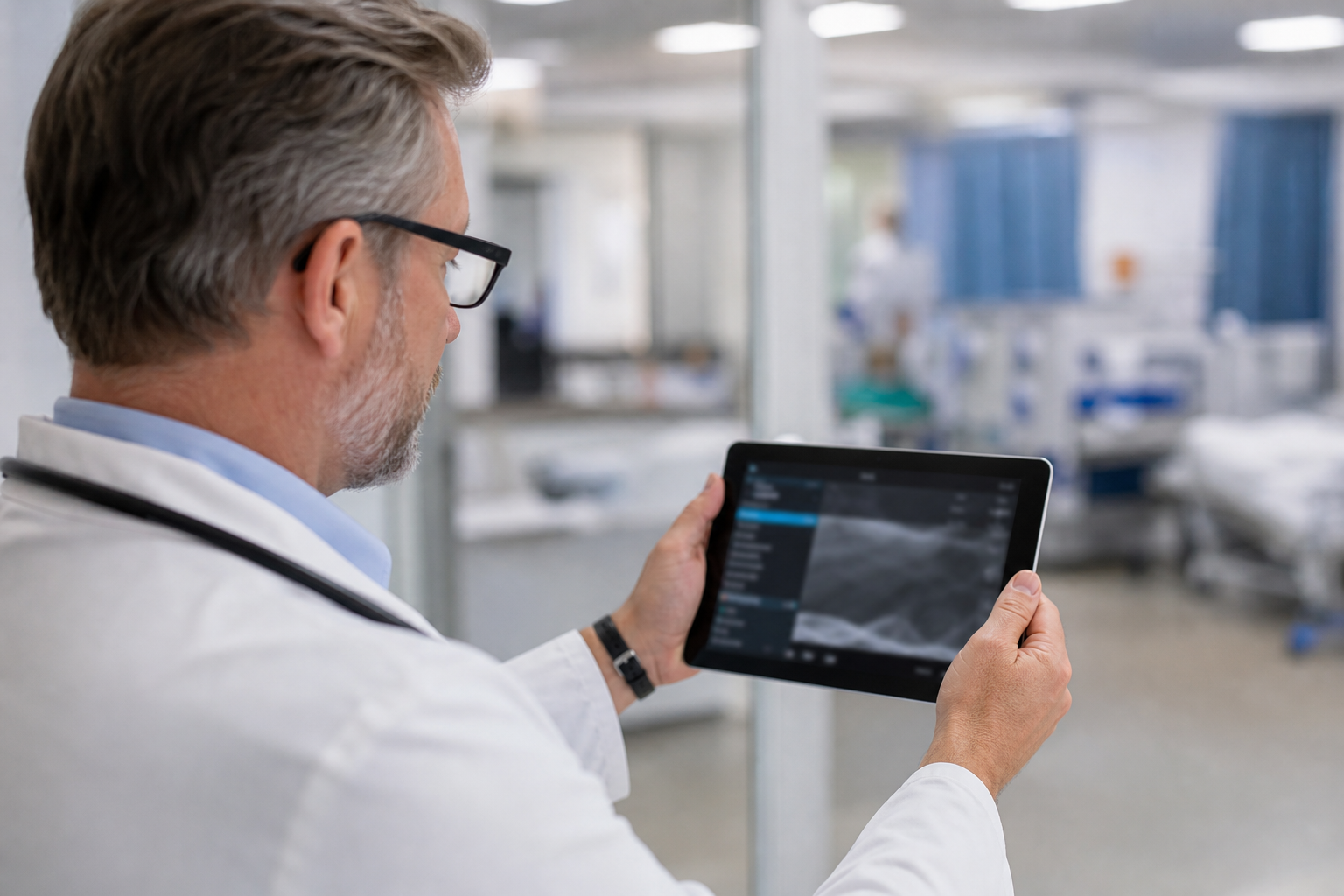
Mobile programmes stall when they copy desktop assumptions onto phones and tablets. The better pattern inherits trust boundaries: least privilege, predictable logout behaviour, and support tooling that can explain access paths without slowing legitimate care.
If your organisation has lived through an over-permissive pilot before, the right rollout is boring on purpose: measured scope, explicit acceptance criteria, and telemetry that proves behaviour—not anecdotes.
Device trust, session hygiene, and shared clinical spaces
Bedside and ward environments introduce shared devices, intermittent connectivity, and rapid hand-offs. Mobile imaging access must assume hostile networks and messy physical contexts: timeout behaviour, re-authentication after idle, and clear visual cues for which patient context is active. “Convenience” that blurs patient boundaries is not convenience—it is an incident waiting to happen.
Australian privacy officers increasingly scrutinise off-site access patterns, including after-hours consultant review from home networks. Technical controls should pair with policy: which roles may access off-site, which study types require on-campus review, and how exceptions are approved and logged.
Clinical scenarios: ED, ward, theatre, and on-call
Emergency workflows need near-real-time imaging with minimal taps and maximal certainty about encounter linkage. Ward rounds benefit from readable stacks and quick comparison to recent priors without deep navigation. Theatre and procedural areas may require sterile-field constraints that change how devices are handled. A serious mobile programme maps each scenario to acceptance tests—not a single generic “go-live” checklist.
On-call consultants often operate under fatigue. Interfaces should reduce cognitive load: obvious escalation paths, consistent iconography with the core viewer, and safeguards against mistaken patient selection that go beyond a single “are you sure?” dialog buried in training slides.
Operational support for mobile estates
Mobile estates fail silently when certificate rotations break app trust, when OS upgrades change biometric APIs, or when MDM policies conflict with clinical needs. Support tooling should capture device posture, app version, and correlation identifiers so first-line triage does not waste cycles reproducing issues that are already visible in telemetry.