
Radiology viewing & reading
High-fidelity presentation, dependable hanging protocols, and reporting workflows tuned for diagnostic reading rooms—without sacrificing the governance expectations of Australian hospitals and imaging groups.
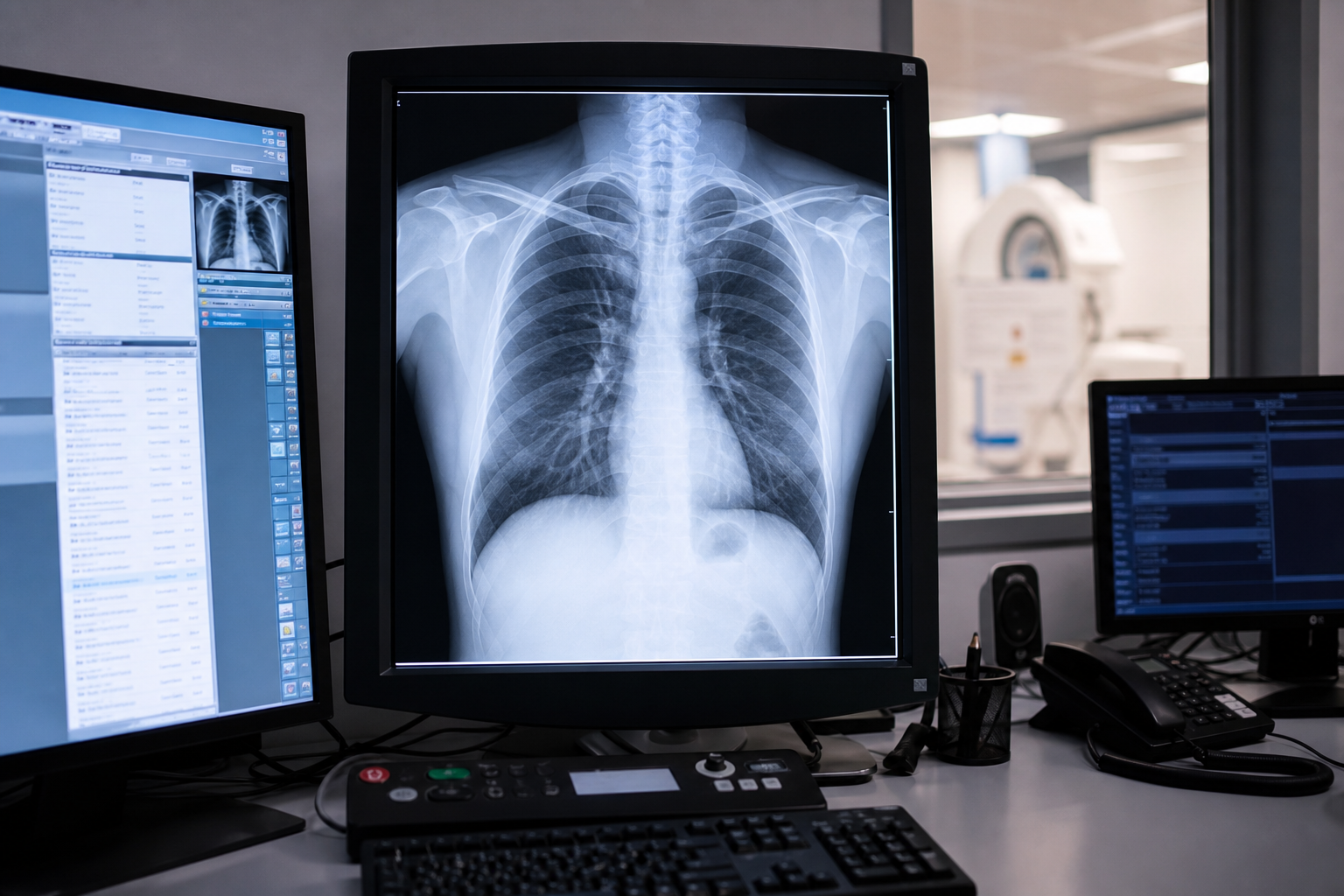
Reading environments fail in subtle ways: priors that arrive late, tools that diverge between sites, and macros that drift out of sync with reporting standards. A coherent viewing strategy treats those risks as operational incidents waiting to happen—and designs them out early.
Whether you are refreshing workstations or standardising across a network, the goal is the same: a radiologist should spend cognitive energy on the case, not on reconciling the workstation with yesterday’s configuration.
Hanging protocols as a governance surface
Hanging protocols encode subspecialty judgement: how stacks align, when priors appear, and which comparison series are expected. When protocols diverge informally between sites, quality and throughput become uneven. Treat protocols like configuration code: branch, review, promote, and retire—with visibility into which workstations and lists consume which revision.
Mammography, neuro, MSK, and paediatric pathways each carry distinct ergonomics and QA expectations. A viewing platform should allow those differences without fragmenting your support model into dozens of “snowflake” builds that cannot be reasoned about during an incident.
Image lifecycle: priors, prefetch, and network behaviour
Prior fetch is not a background nicety; it is part of the diagnostic workflow. Prefetch policies must balance network capacity, storage hygiene, and clinical urgency—especially for cancer pathways where missing priors directly affects staging decisions. Observability should include prefetch hit rates and latency percentiles, not only “PACS up/down”.
For Australian wide-area networks and regional archives, latency spikes can be seasonal and vendor-specific. Your viewing architecture should degrade predictably: visible warnings, partial series handling that is explicit, and tools for radiologists to escalate missing priors without leaving the reading context.
Reporting ergonomics: dictation, structured fields, and addenda
Reporting is where viewing meets documentation. Voice profiles, macros, pick-lists, and structured fields must stay coherent with template governance elsewhere in the suite. Addendum workflows should preserve linkage to the original signed report and carry forward audit metadata required for medico-legal review.