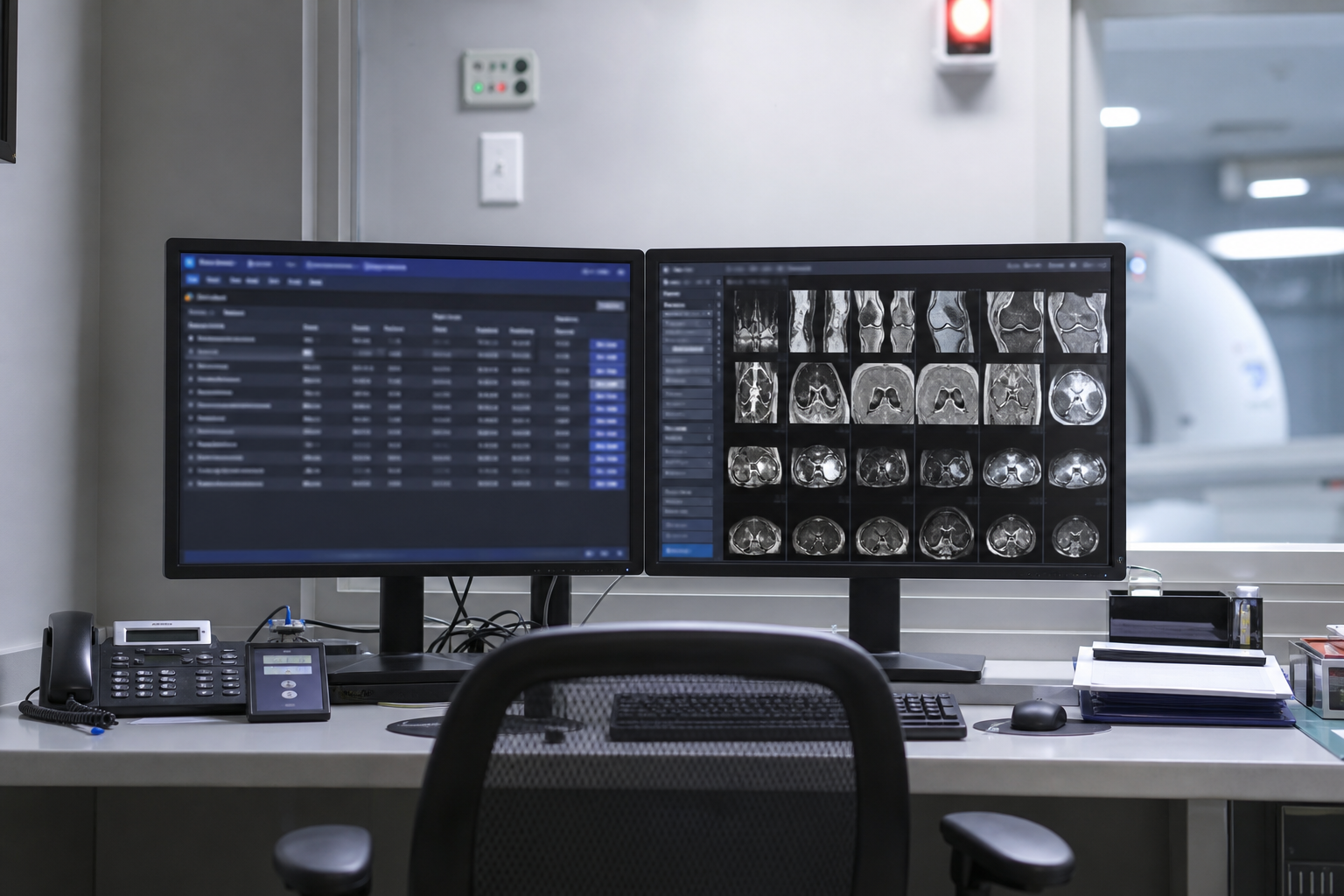
Worklists that respect clinical reality
When prioritisation becomes political, quality drifts. A grounded view on queue discipline, fairness, and why “sort order” is a governance surface.
Read article
Long-form notes on how Australian imaging organisations actually run: worklists, interoperability, after-hours pressure, access governance, structured reporting, and continuity when systems are under stress. These pieces are deliberately opinionated—written for directors of medical imaging, CIOs, and vendor managers who own outcomes, not slide decks.
Each article stands alone but shares a common lens: what must be true for imaging software to remain trustworthy at scale—queue fairness, reconciliation discipline, session hygiene, template governance, and incident rehearsal. If you are preparing a business case, use these pieces as prompts for what to verify in references and proof points, not as generic thought leadership.
When prioritisation becomes political, quality drifts. A grounded view on queue discipline, fairness, and why “sort order” is a governance surface.
Read article
Night-time reporting is where fragile systems show their seams. Escalation paths, latency, and the difference between coverage and capability.
Read article
Connectors are easy to count; trust is not. Treating interfaces as obligations—logging, reconciliation, and ownership when messages disagree.
Read article
Bedside and on-call access only earns its place when it mirrors permissions, session discipline, and evidence trails from the core environment.
Read article
Mandatory fields multiply until reporters revolt in free text. A sharper approach: fewer obligations, tighter coupling to real clinical decisions.
Read article
Downtime is a clinical incident with a different name. Why imaging dependencies deserve their own rehearsal, runbooks, and executive vocabulary.
Read article